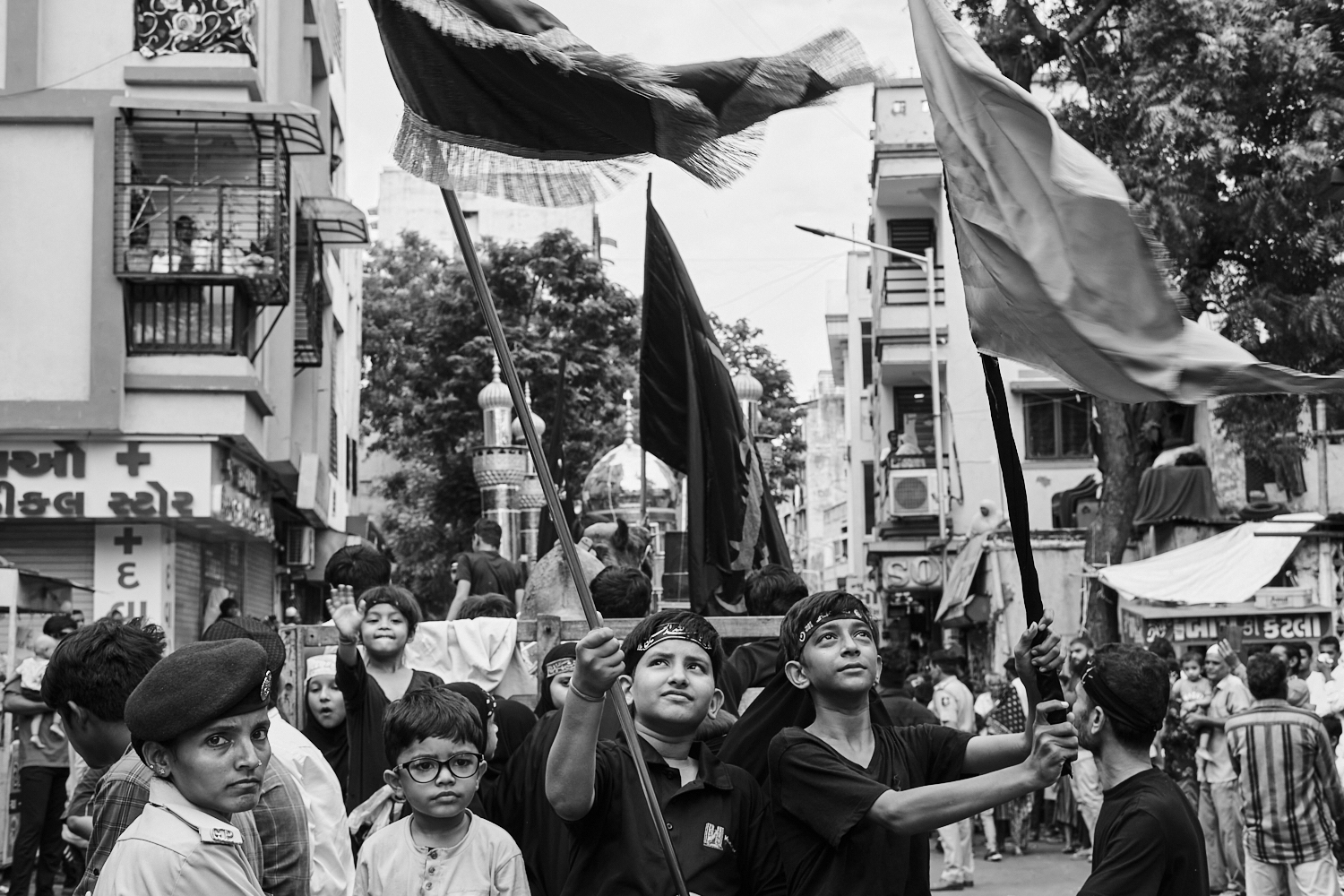
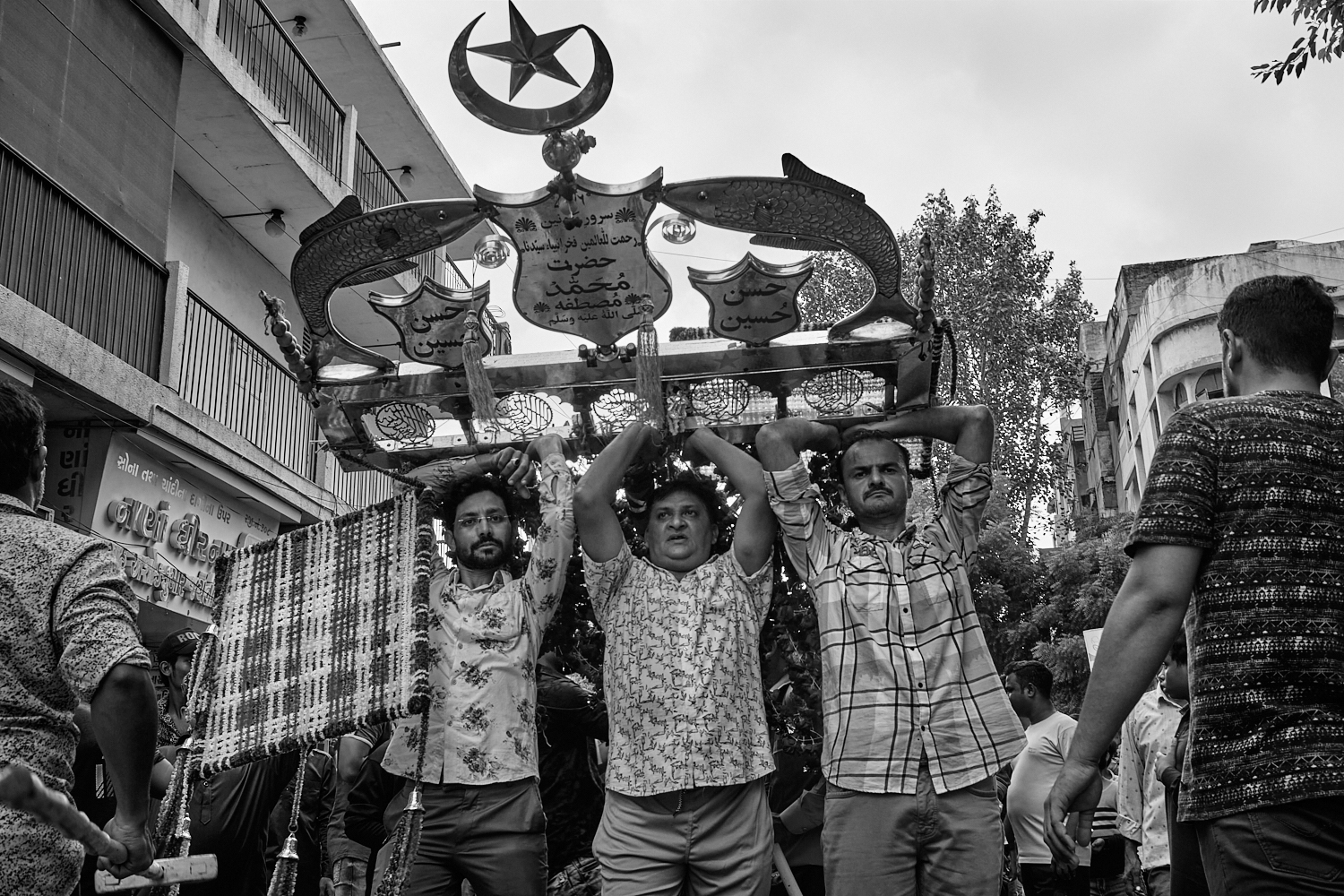
Muharram is the first month of the Islamic calendar and one of the most important times for Shia Muslims worldwide in remembrance of the battle of Karbala – especially the martyrdom of Imam Hussein, in 680CE. Ashura is observed on the 10th day of Muharram.
The death of Imam Hussein – the grandson of Prophet Muhammad – is considered by the Shias to be a symbol of humanity’s struggle against oppression, tyranny, and injustice.
Rituals on Ashura include public mourning, tazia processions, community meals, and acts of charity. Processions often include recitations of marsiya, chanting, and devotees carrying flags and other religious symbols. Sermons recounting the events of Karbala are delivered at gatherings known as majlis.
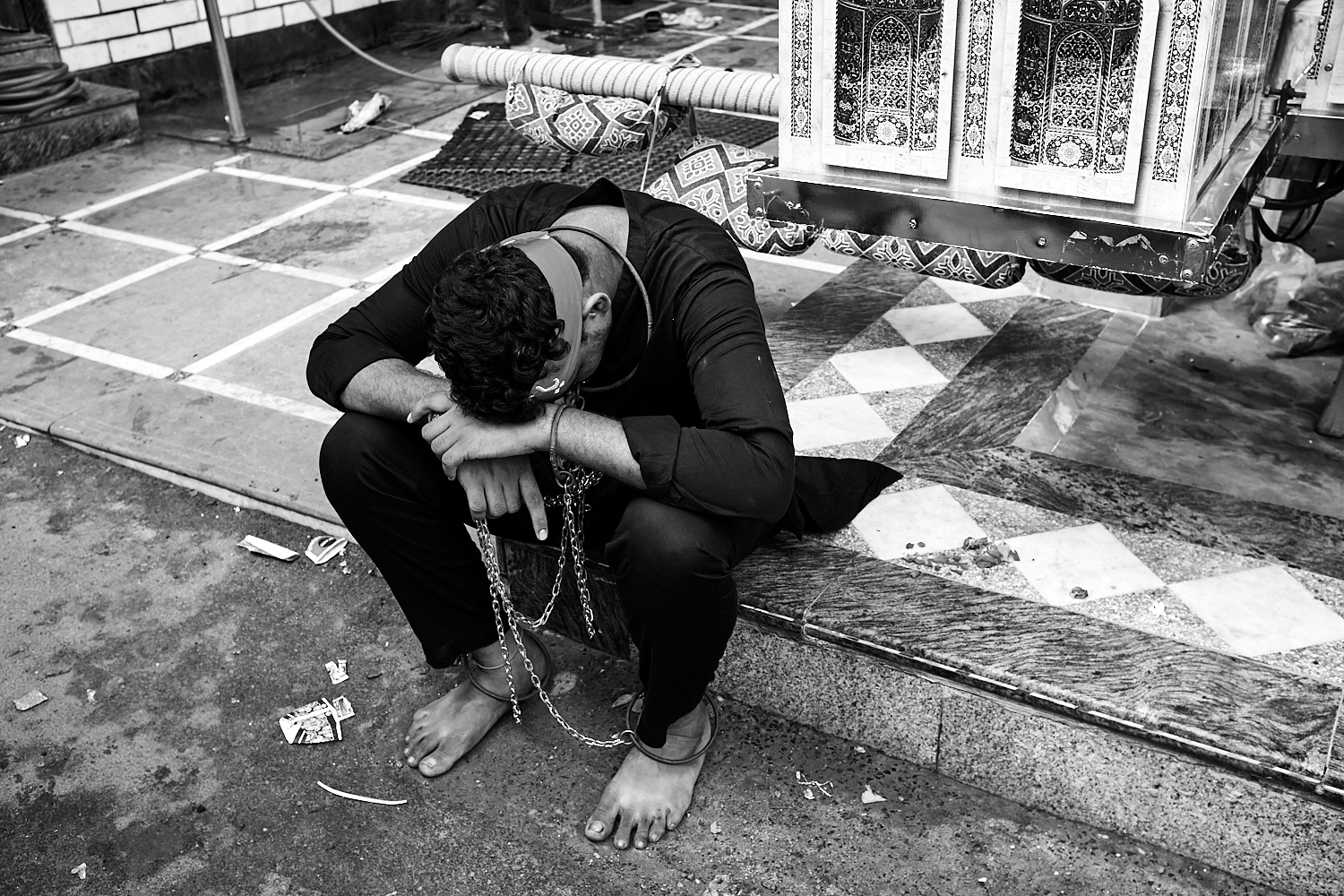
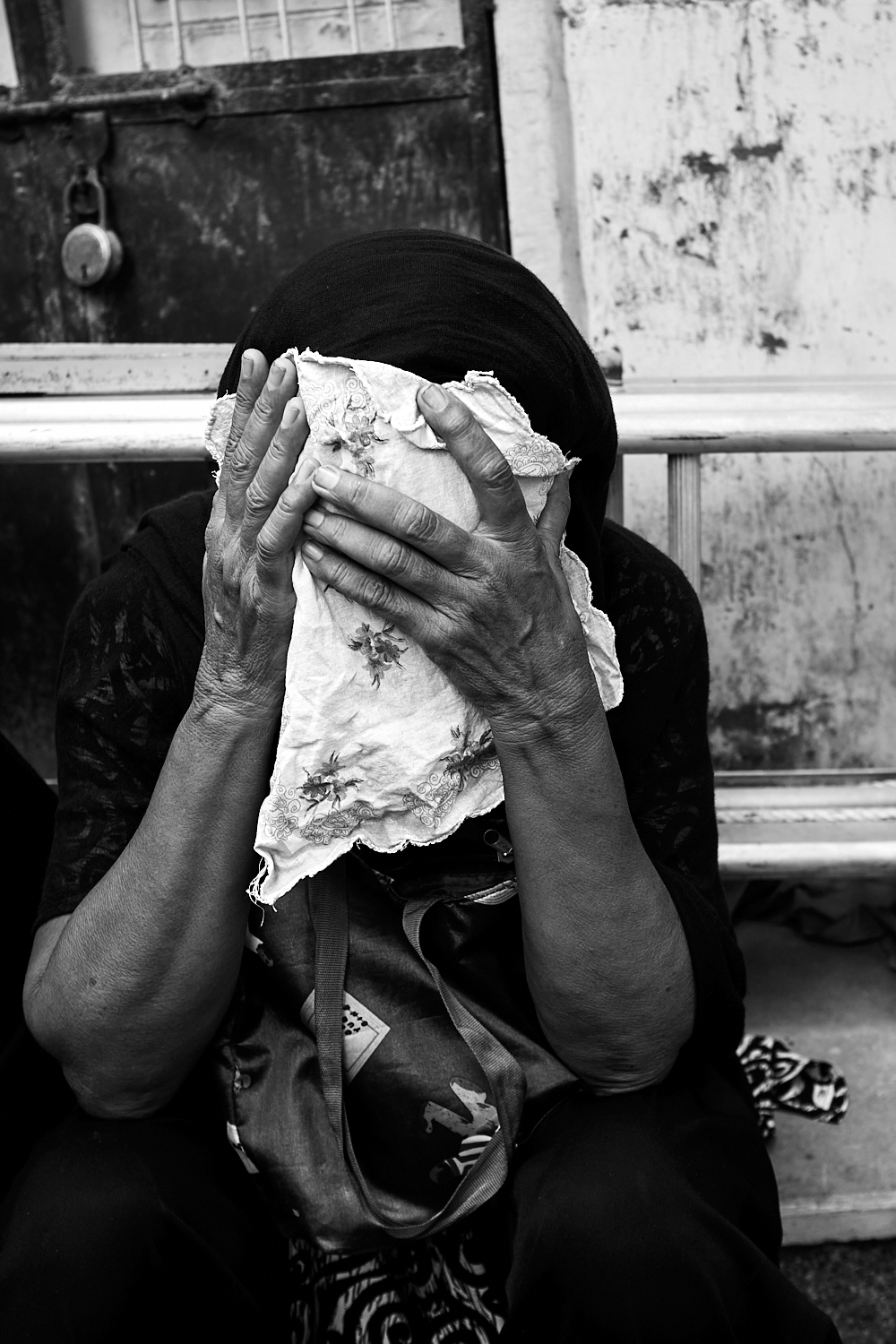
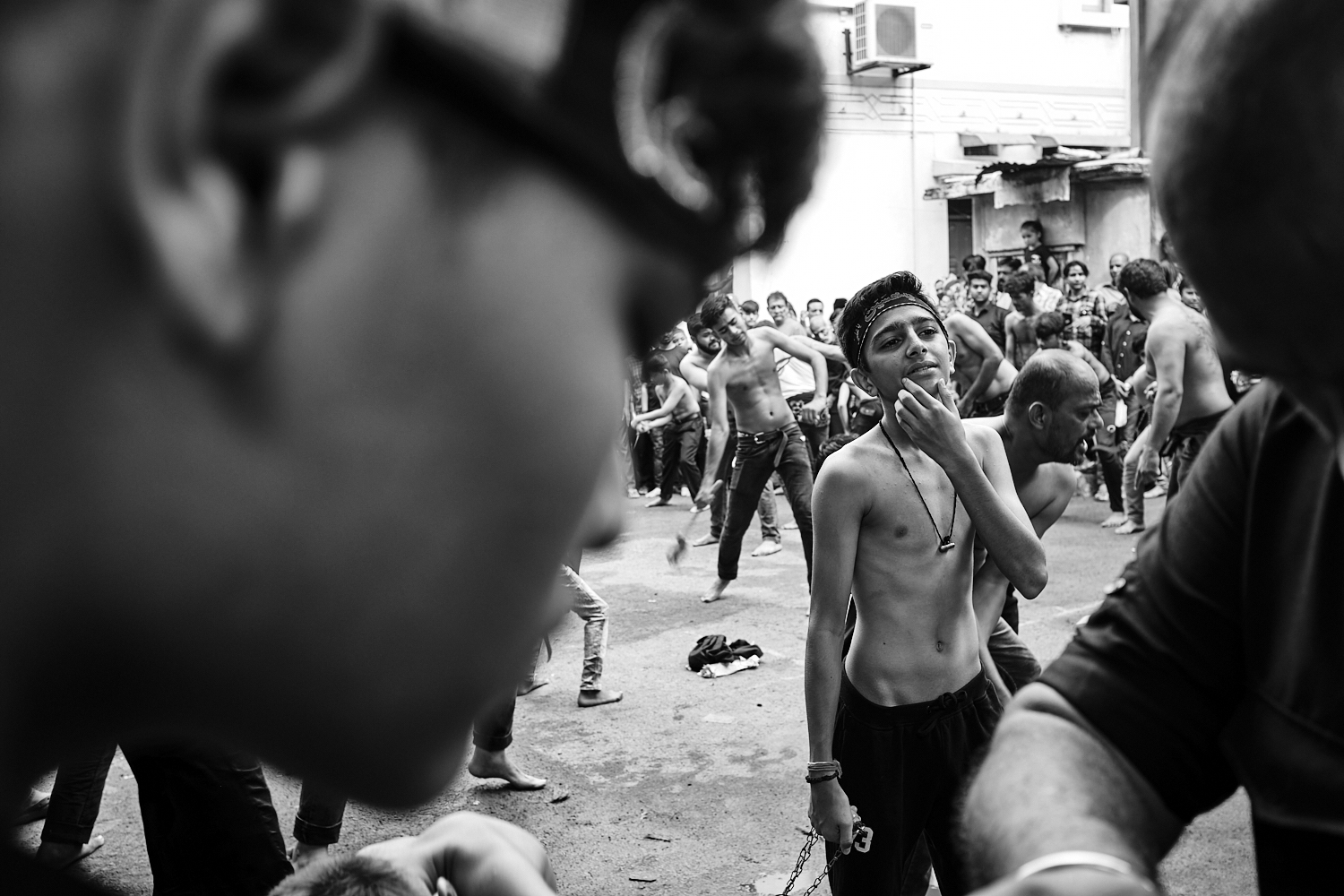
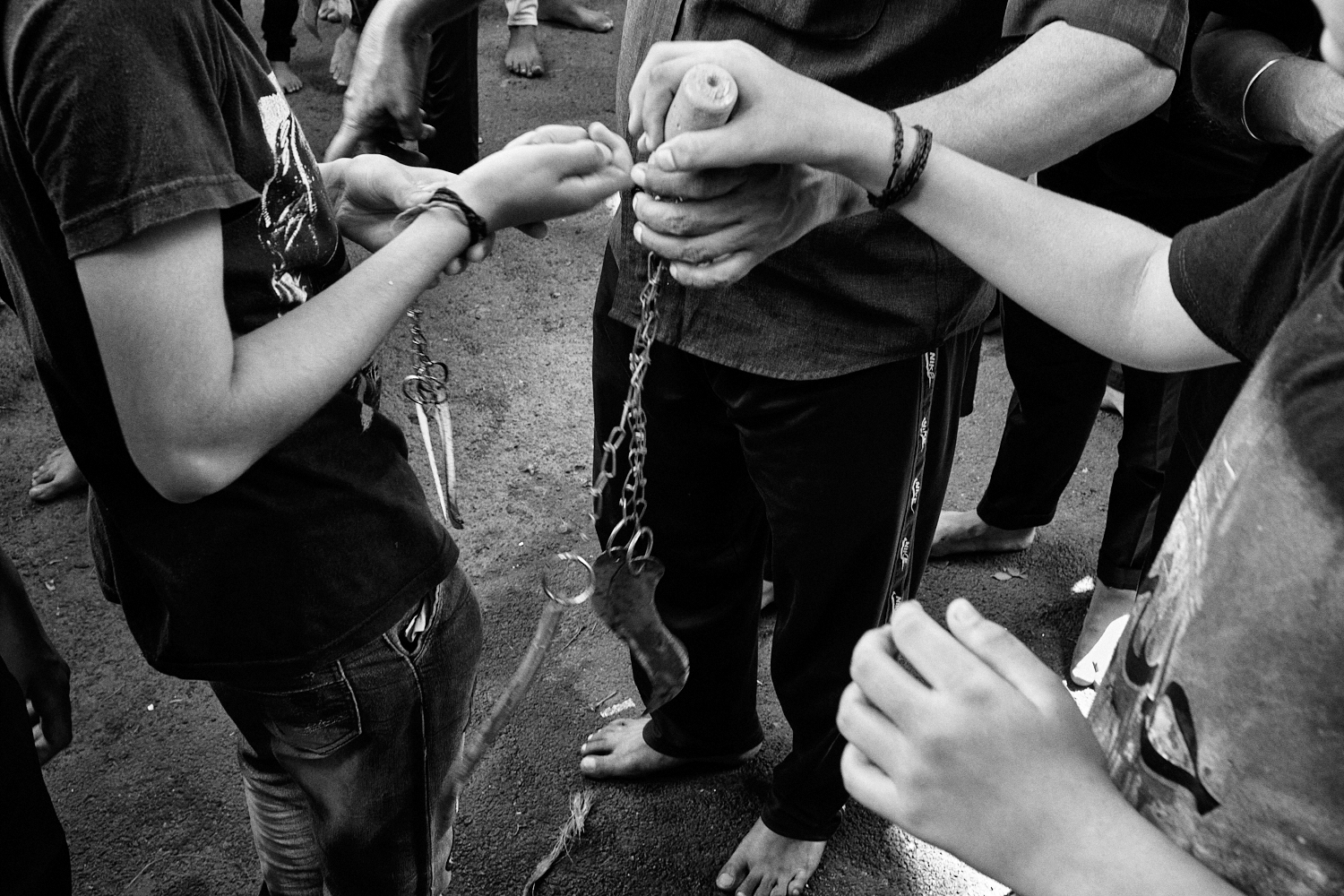
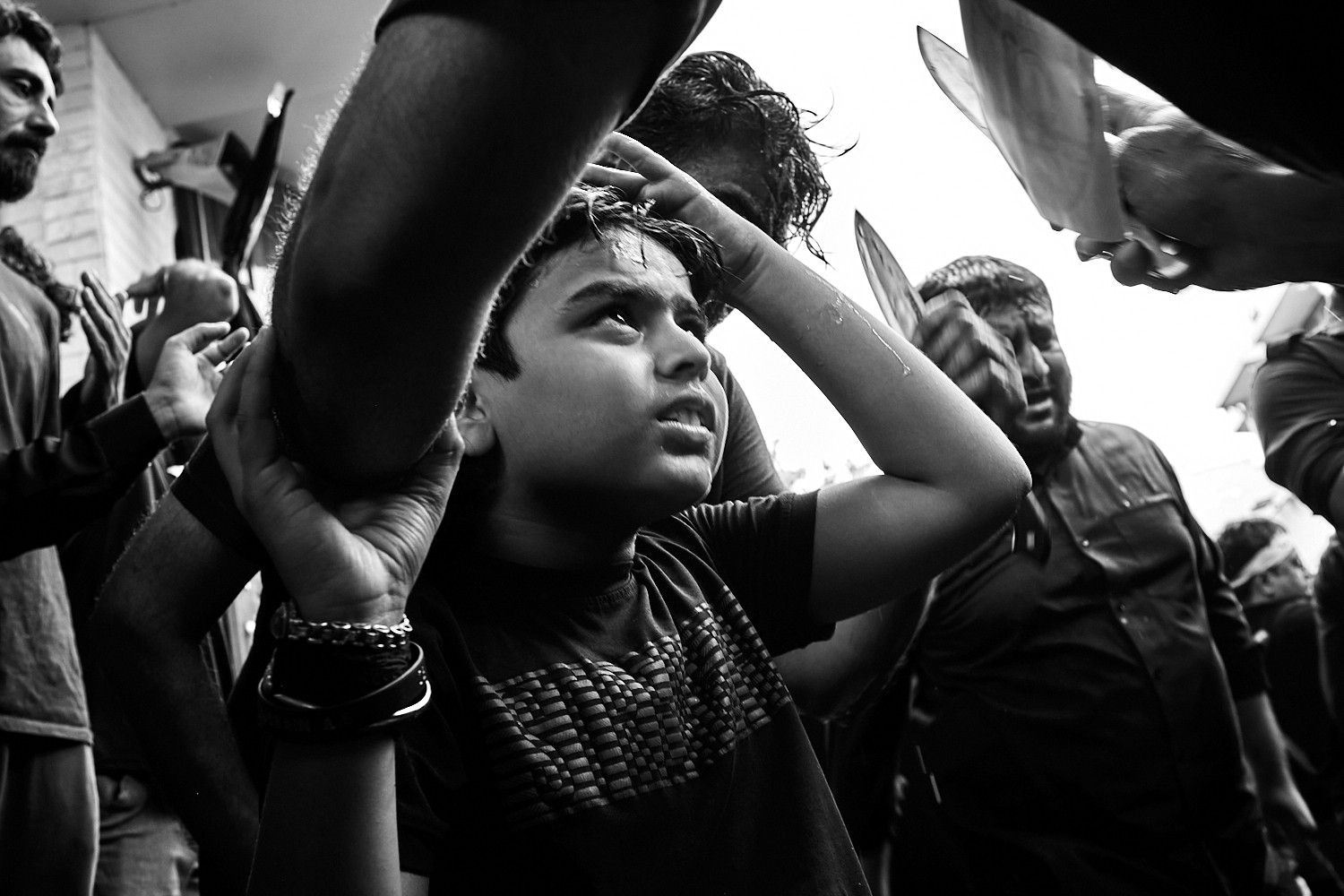
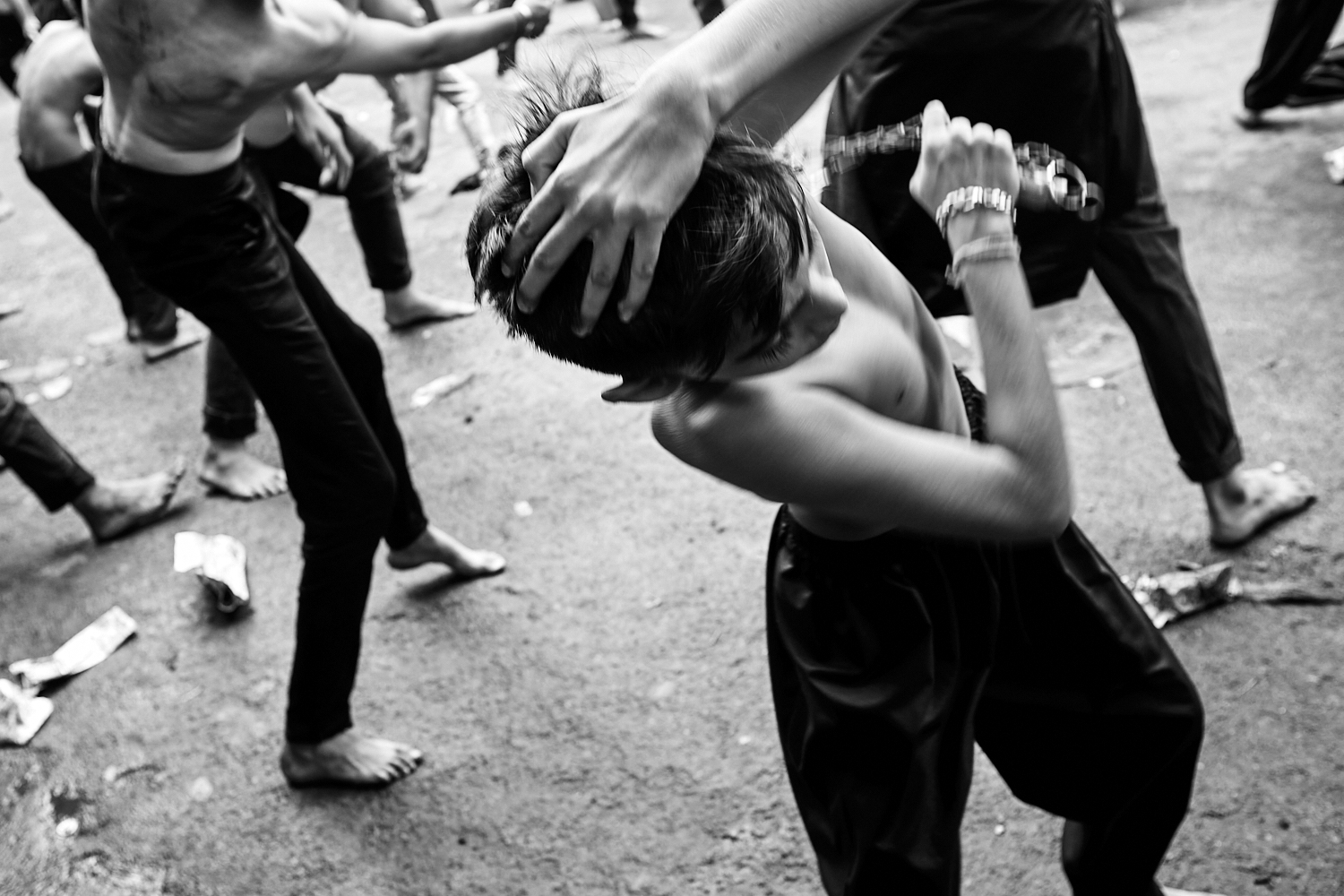
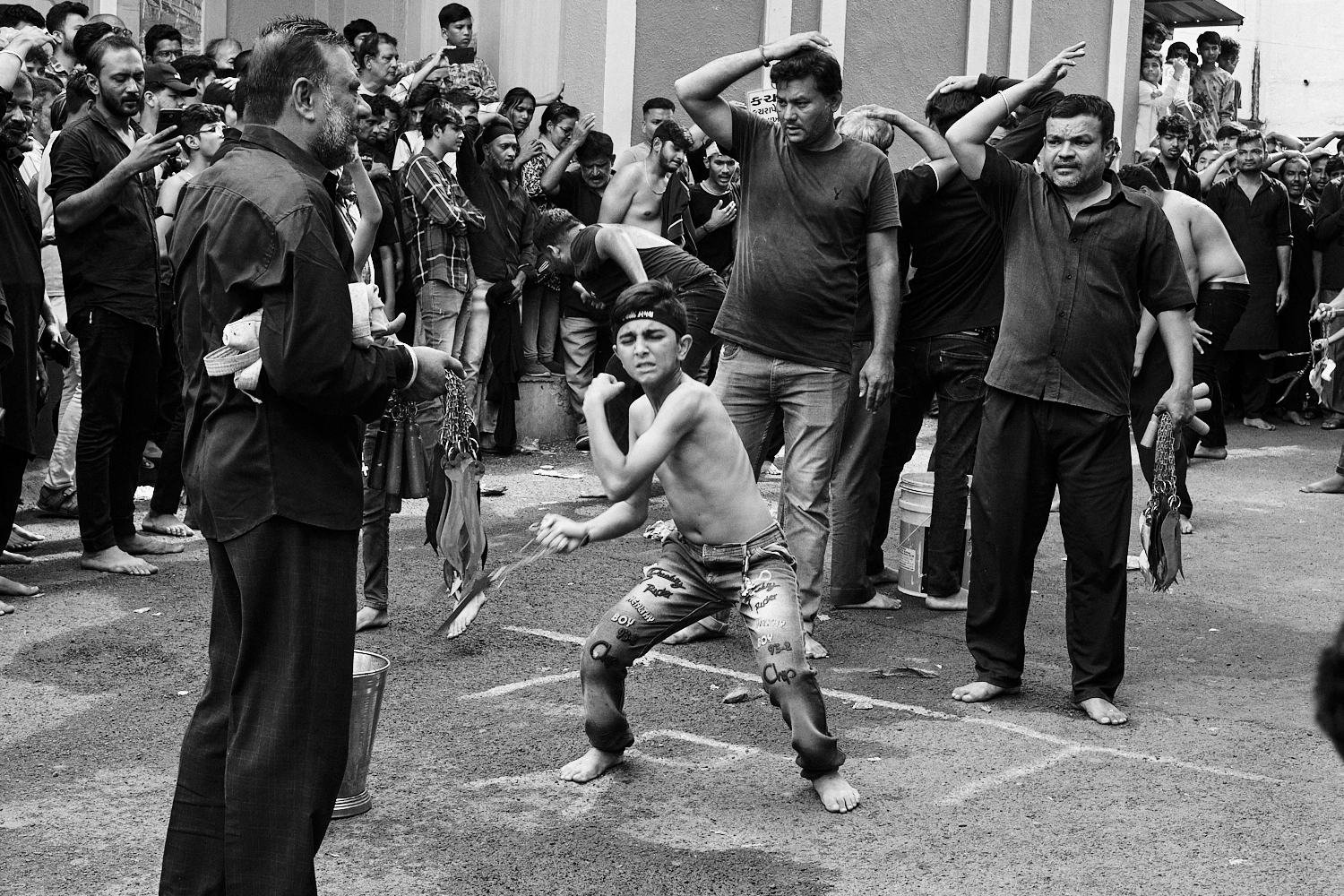
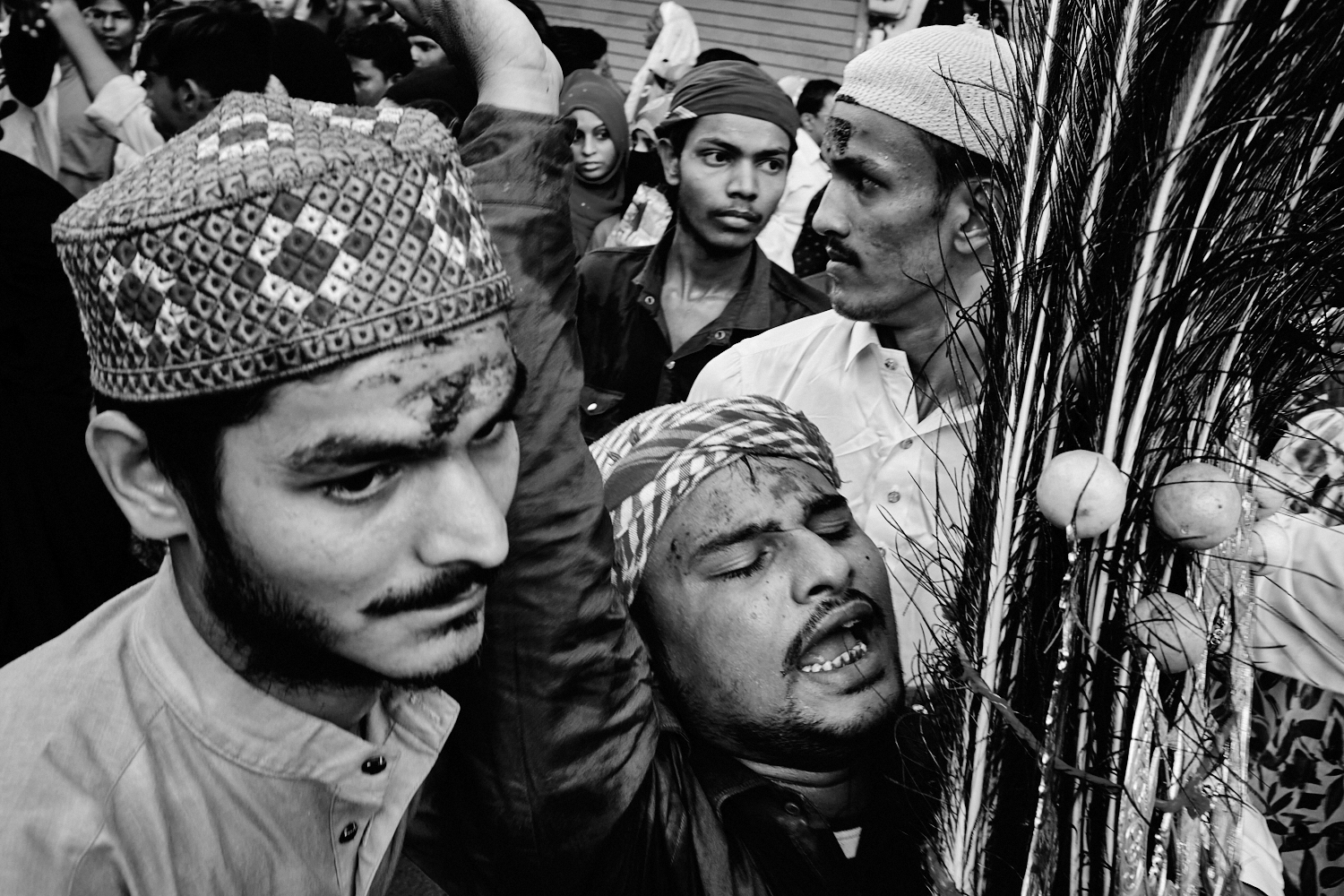
As the sermons are dramatically delivered on loudspeakers, the overall atmosphere turns gloomy. It’s common to find people in tears as they mourn Imam Hussein’s sacrifice. Some men chain their bodies and gently beat their chest while repeatedly chanting “Ya Hussein”.
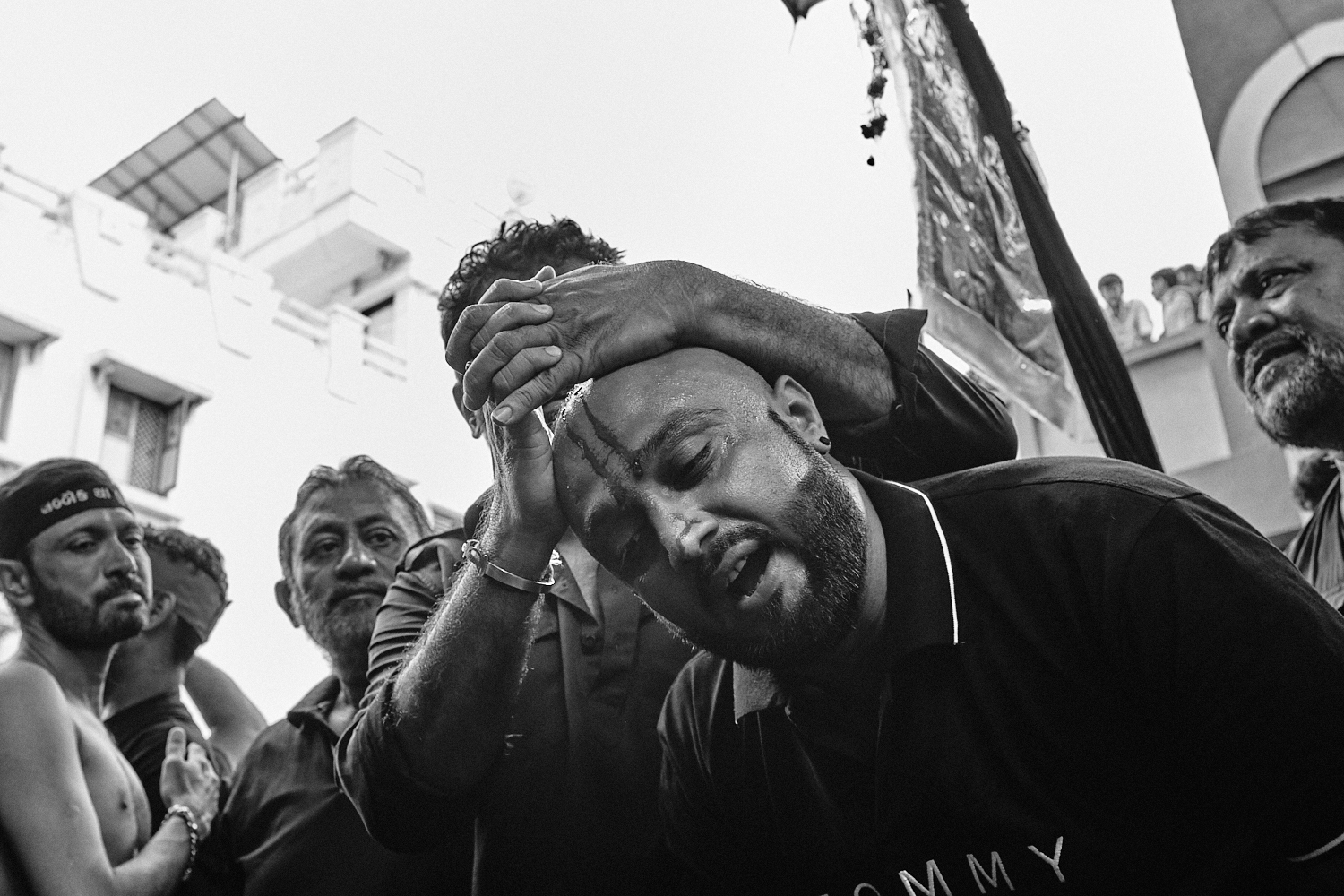
The practice of beating chest and head is called matam.
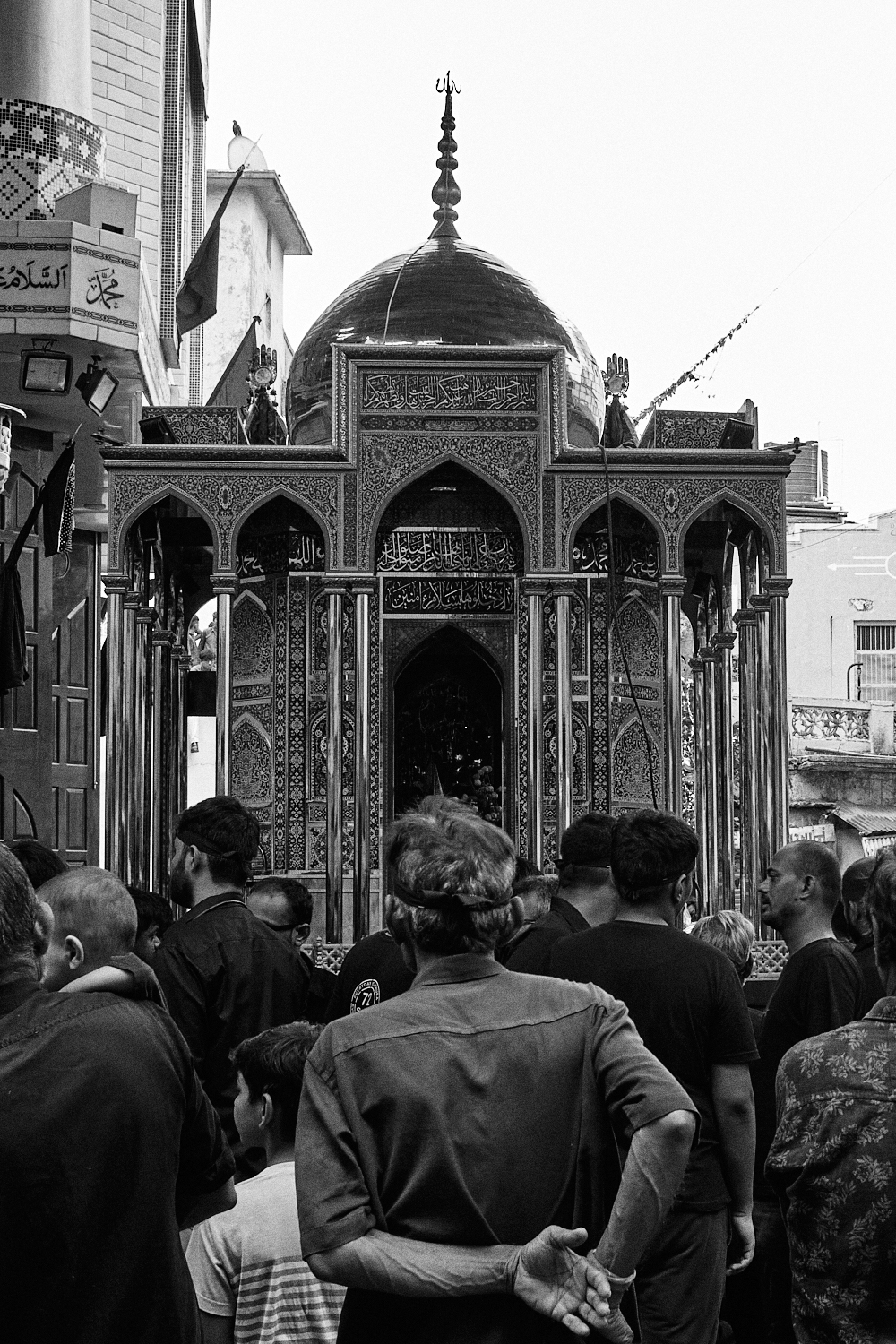
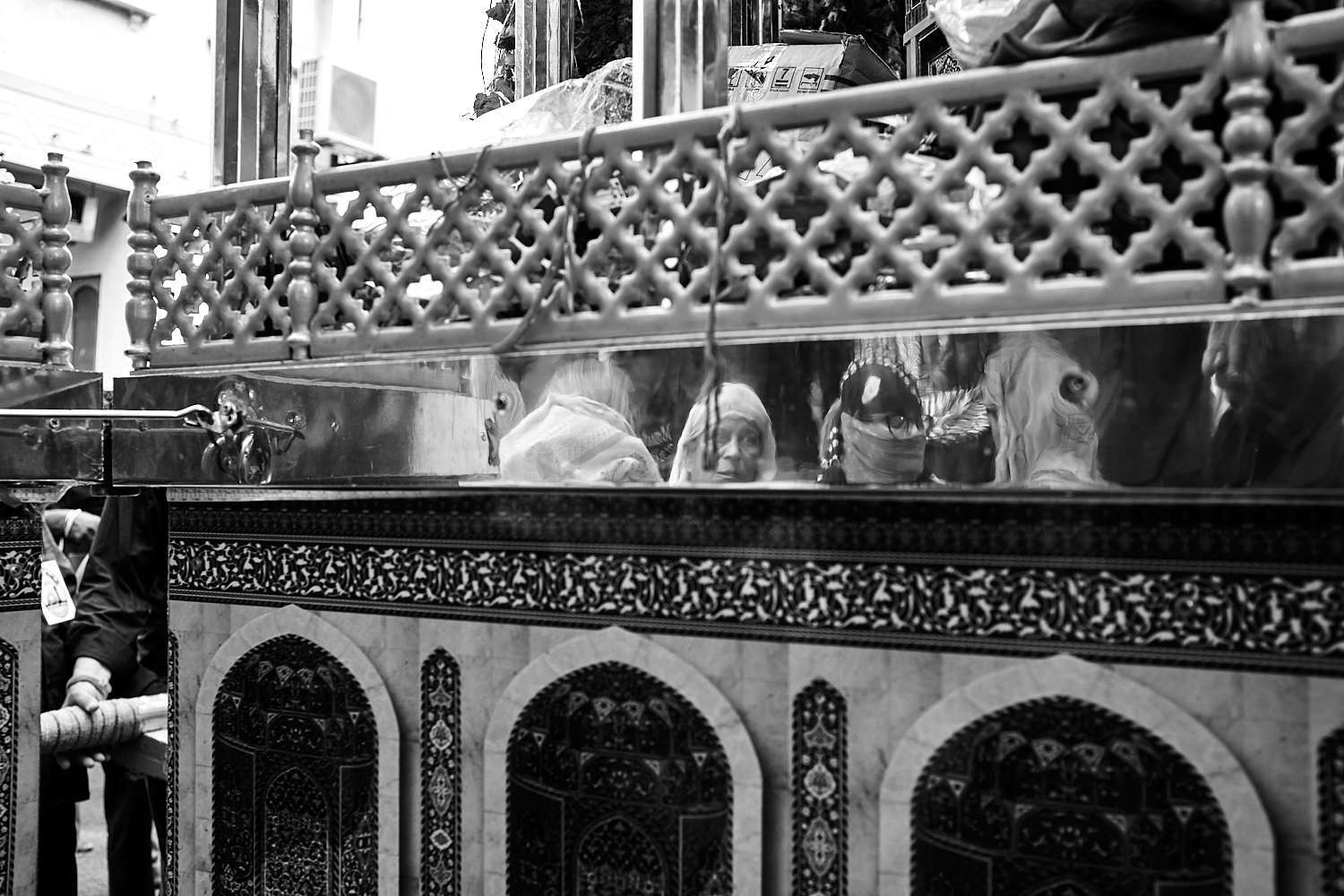
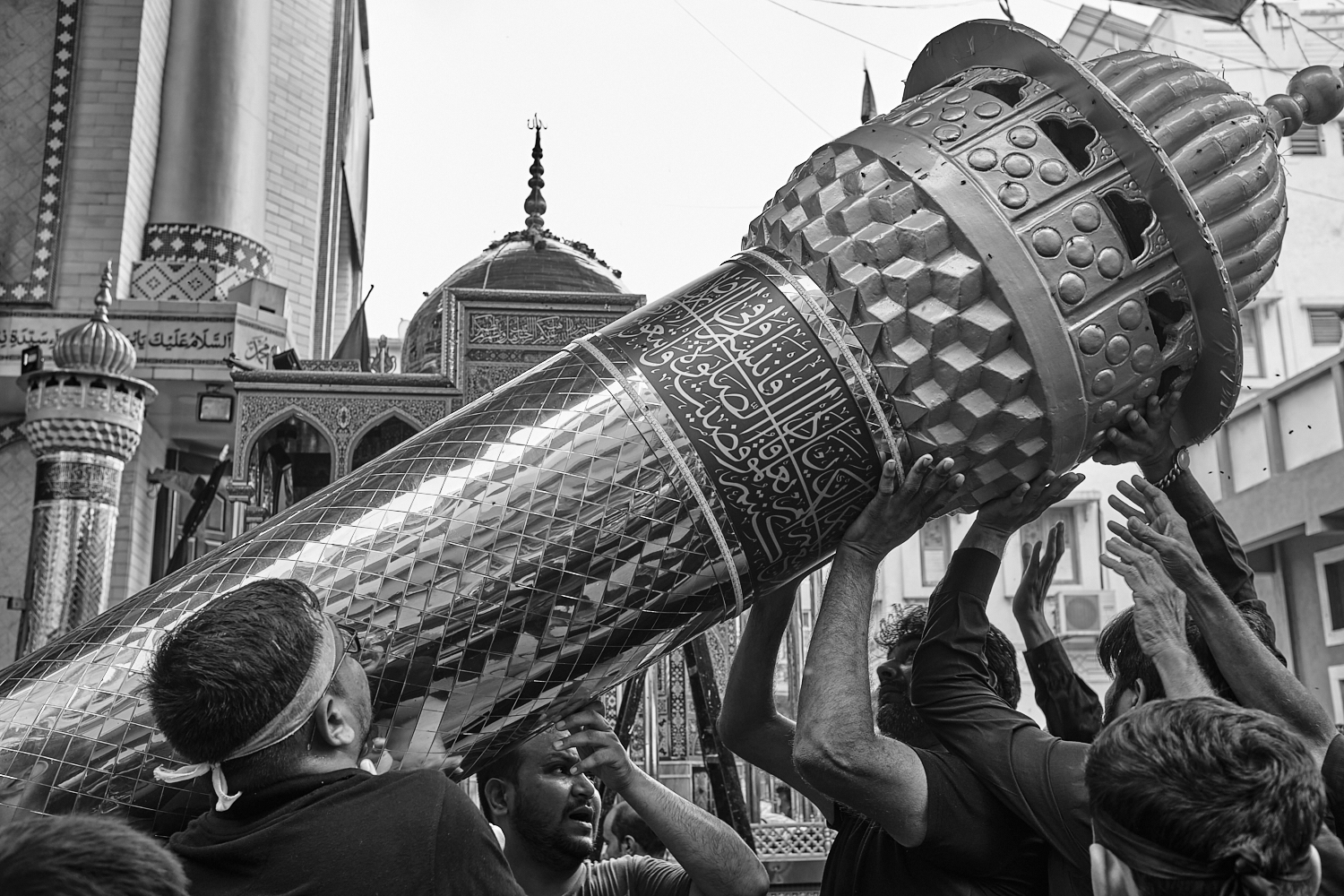
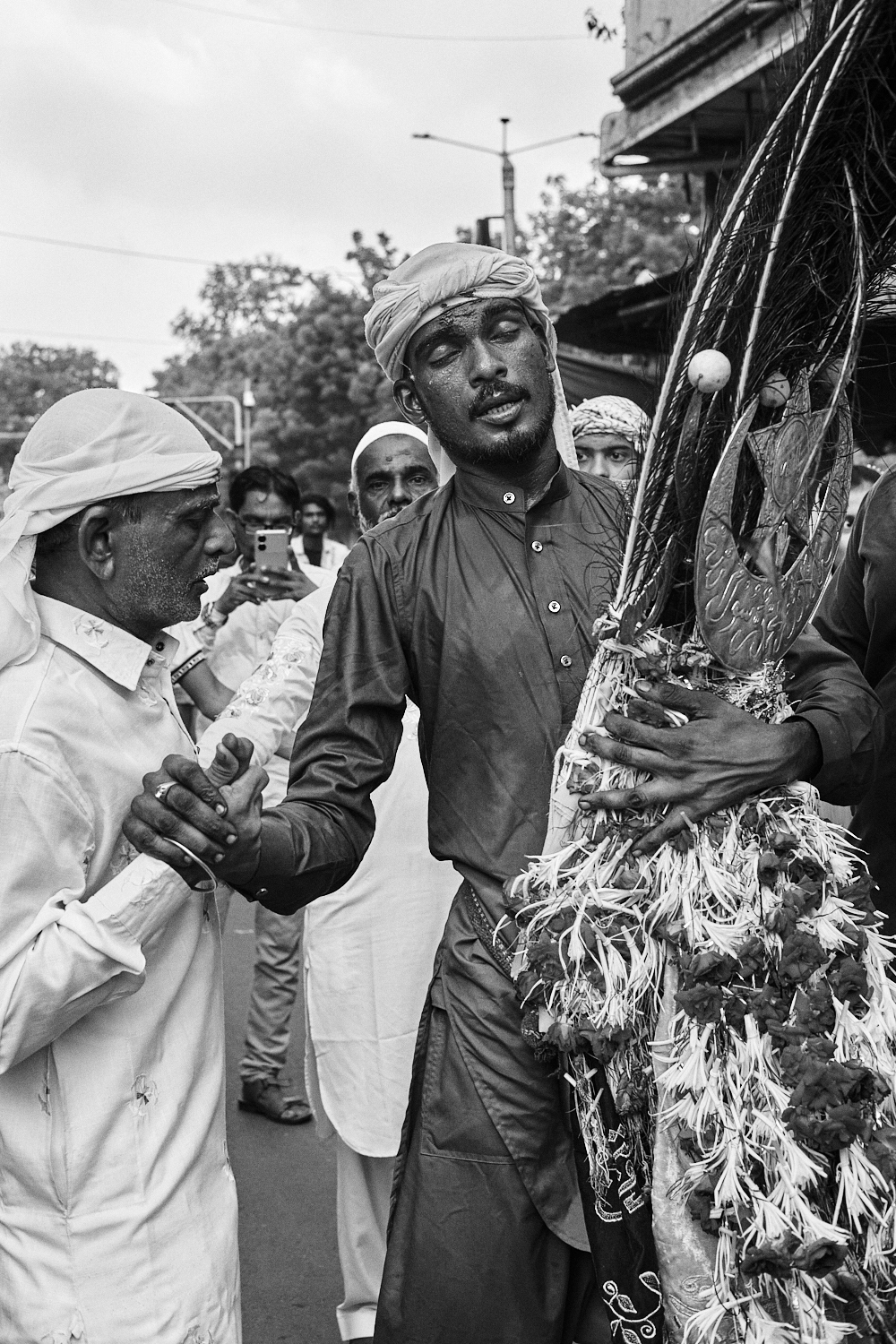
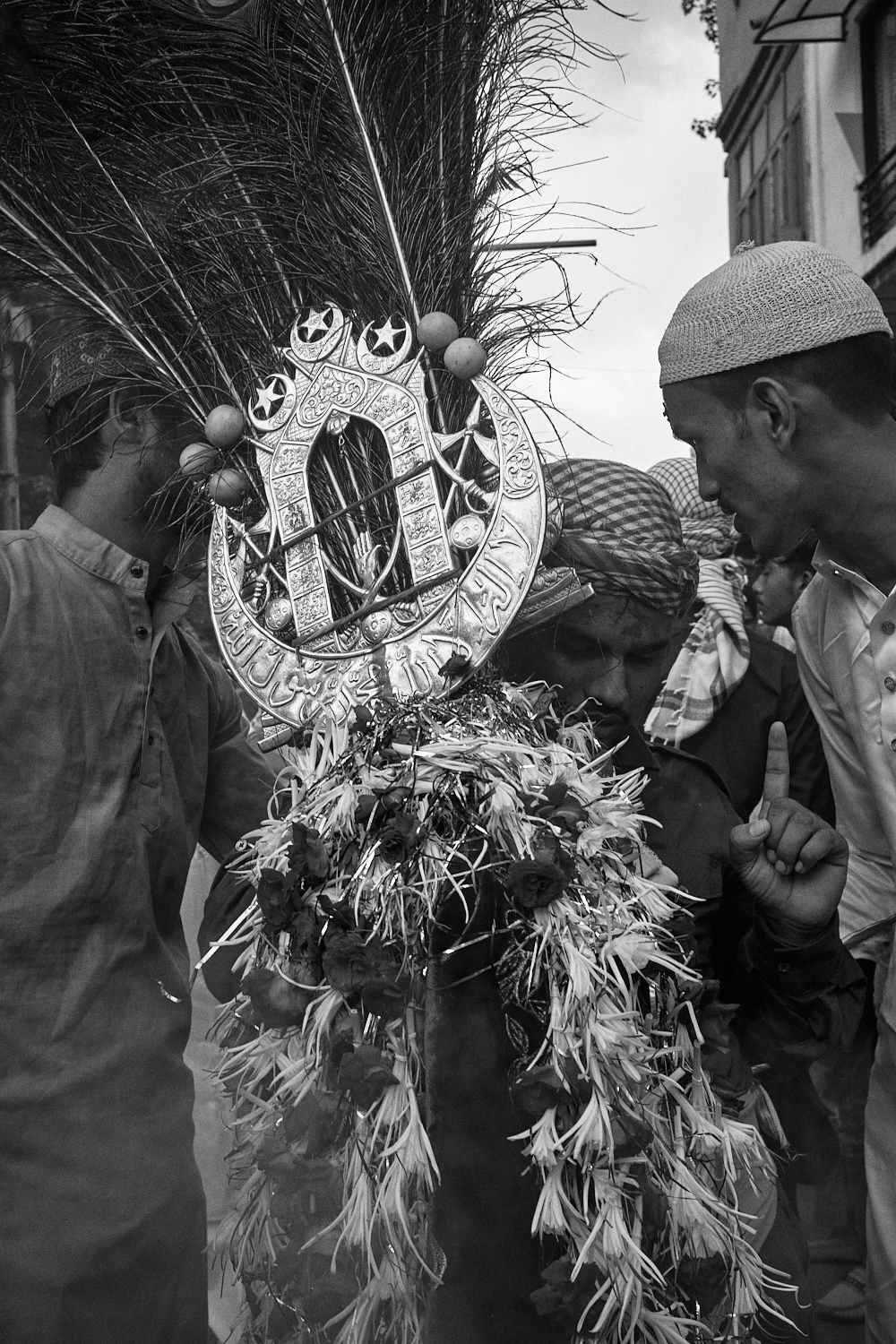
Replicas or models of Imam Hussein’s shrine known as tazias are paraded in the streets. Different neighbourhoods join the procession with tazias varying in size. Tazias are beautifully decorated and typically covered with colourful cloth and embroidered designs. Recitations of elegies, sermons, and rhythmic chanting are parts of the procession.
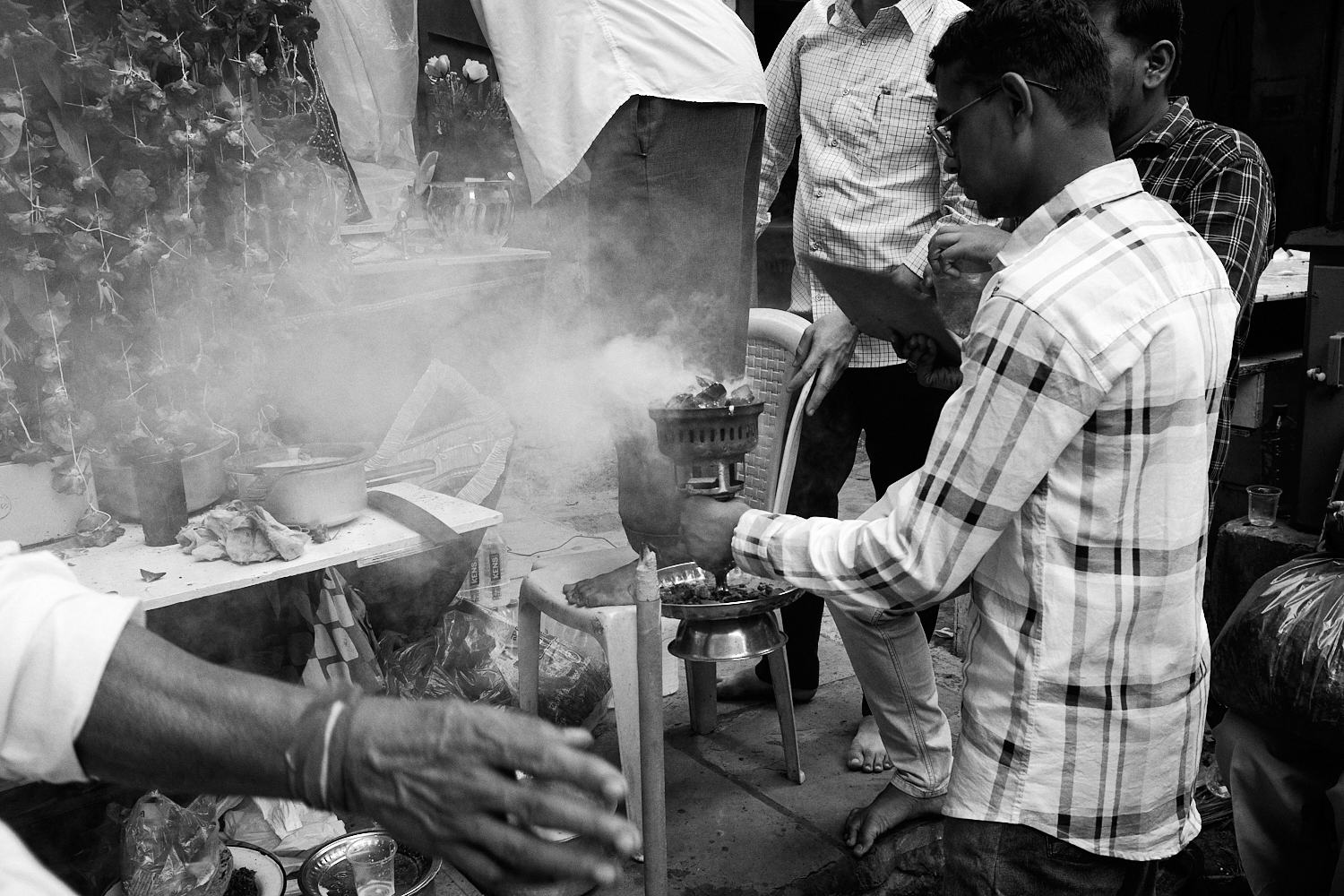
Repetitive drum beats and the smell of lobaan (gum benzoin) fill the air through the procession. Snacks and homemade drinks like shakes and juice are distributed. Kids and elders are seen riding on camel carts.
The tazia functions not only as a ceremonial centerpiece but also as a moving symbol of faith, history, and collective devotion. Towards the end of the procession, tazias are taken for final rites, immersion, or respectful burial depending on local custom.
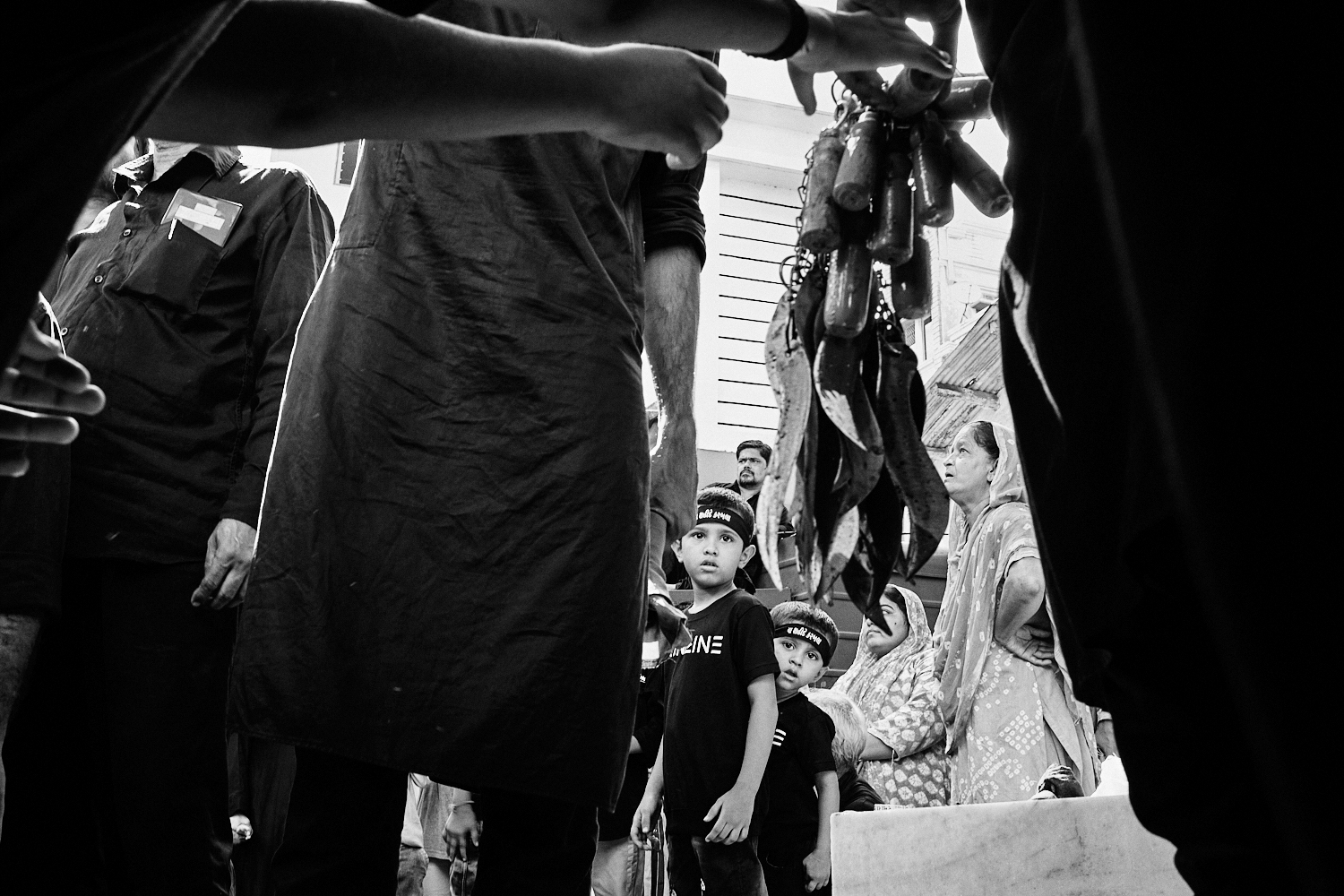
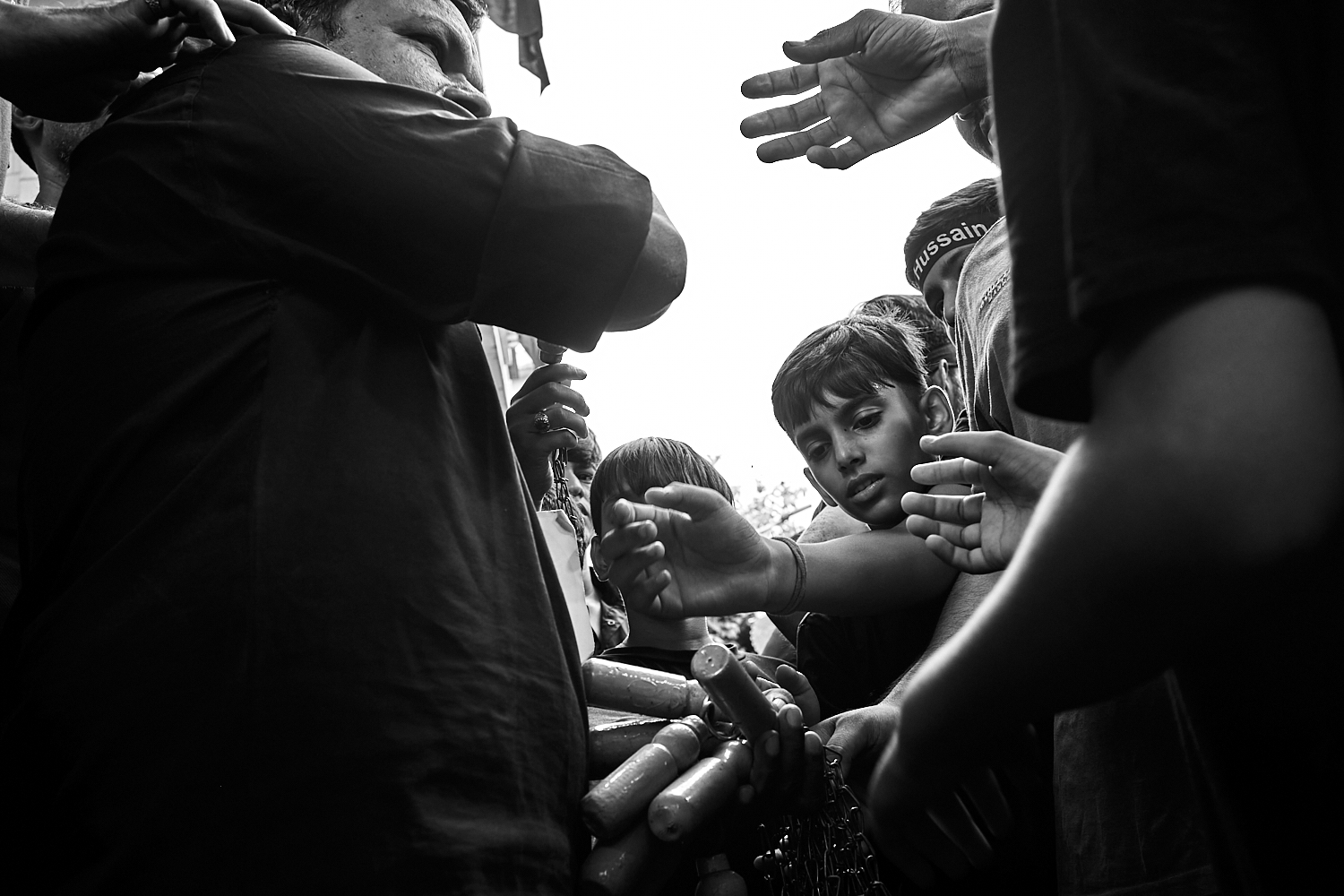
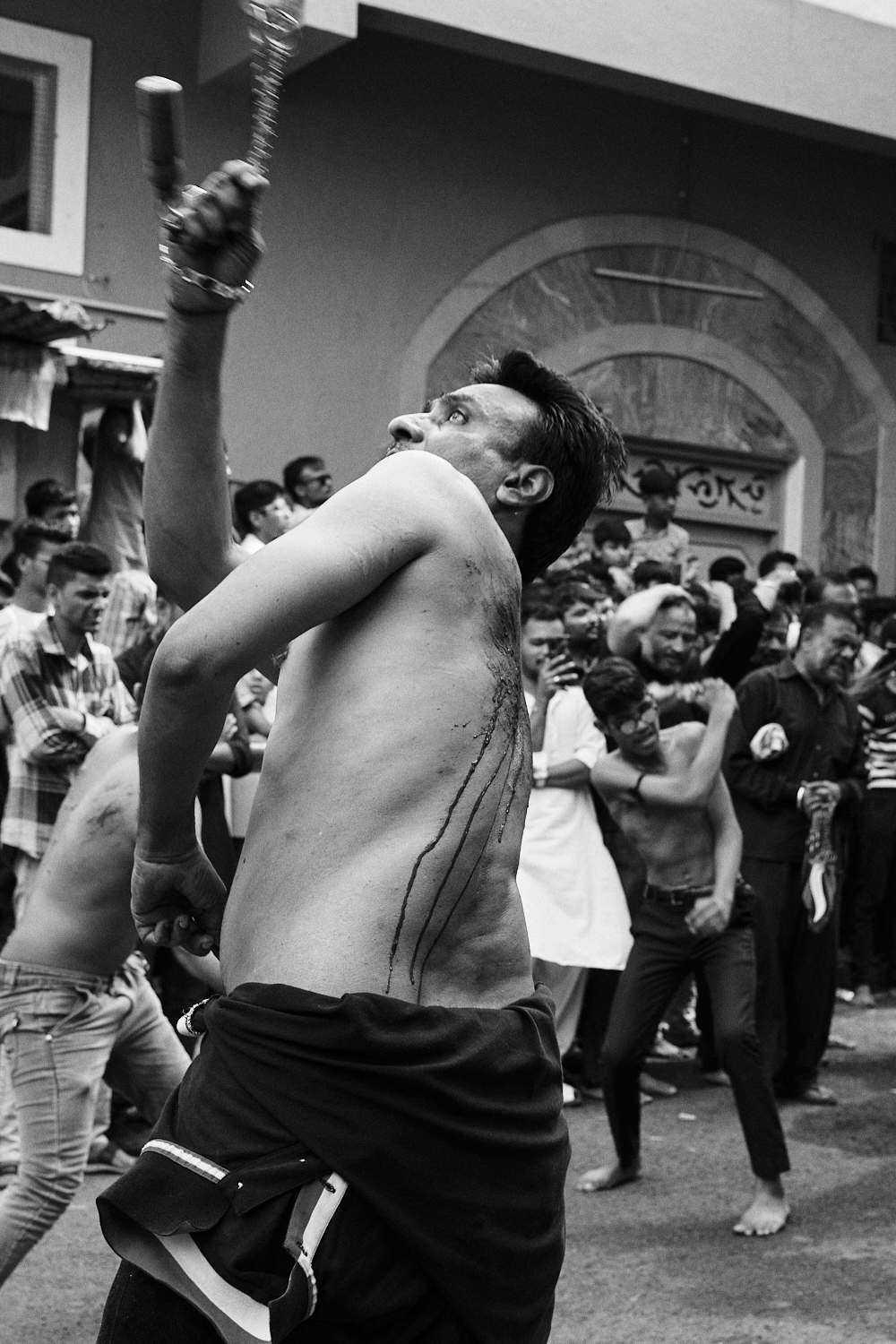
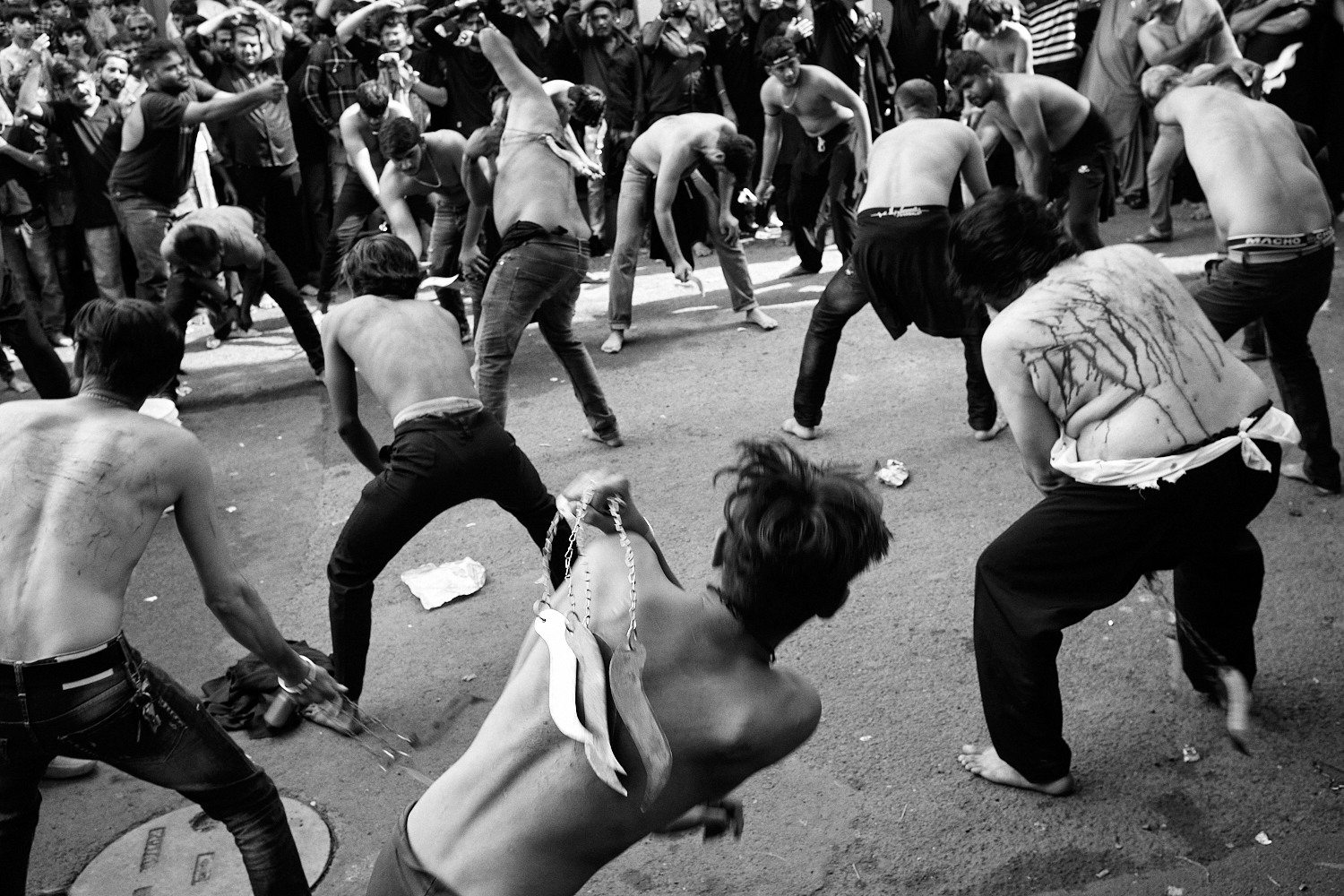
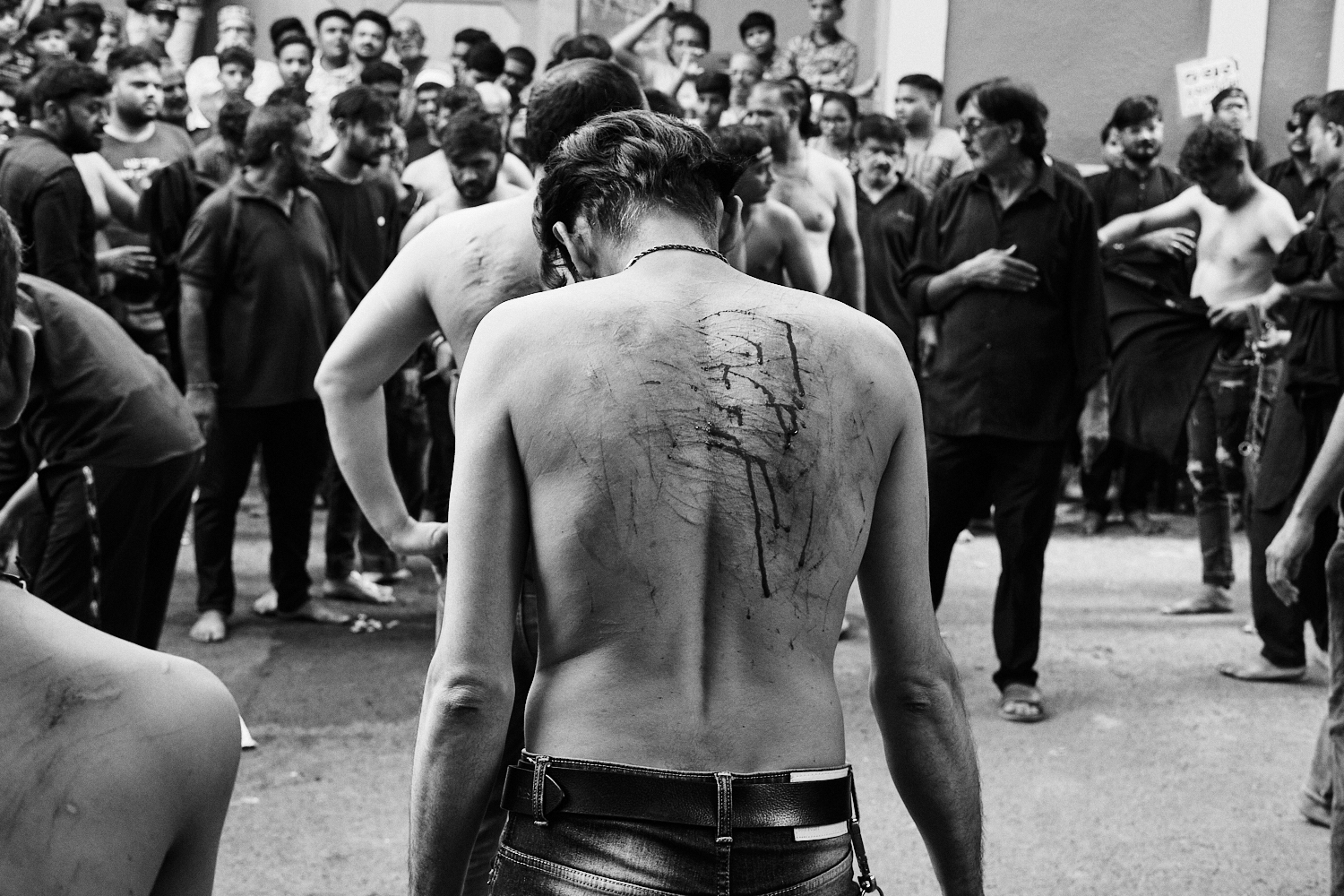
The mourning of Ashura/Muharram is often associated with self-flagellation. But while in some places people engage in self-flagellation, it’s not a rule. Self-flagellation, known as tatbir, is often performed by men – sometimes even young boys – with chains and blunt end of swords or similar objects. People who engage in self-flagellation believe it is done to exemplify the suffering Imam Hussein experienced moments before his death.
The practice of tatbir is contested among Shia clerics. While some permit believers to practice tatbir, many generally deem it impermissible because it is considered an innovation (bid’ah) and self-harm, thus being haraam (prohibited) in Islam.
Shia clerics and scholars such as Ruhollah Khomeini, Ali Khamenei, Ali Sistani, and others have prohibited or discouraged the practice of tatbir during Muharram.
“It is wrongful that some people hit themselves on the head with daggers to break blood. What are they in search of? How can this be considered an act of mourning?
The more I thought about it, the more I truly realized I cannot overlook my responsibility of informing our dear people on Tatbir, which is certainly an act of wrongdoing built upon heresy. Do not practice it”.
– Ayatollah Khamenei. June 07, 1994 (Source: english.khamenei.ir)